

Happy (?) birthday, Axadrezados
Yesterday, the first day of August of the year 2025 was supposed to be a special day for many in the city of Porto. However, this was just another bittersweet day for the supporters of the club with the checkered shirts. A sense of sadness prevails among the fans of Boavista Futebol Clube. While they should be celebrating the club’s 122nd birthday, the team’s dire situation negates any positive feelings among the fanbase.
This historic club, one of only five to have won the Portuguese national league since its inception in the 1930s, has not only been demoted to the regional amateur championships, it might be facing its own extinction.
The situation is dire. In the last round of the 2024/25 Liga Portugal season, Boavista lost 4-1 against Arouca and confirmed the relegation to the second tier of Portuguese football. However, due to both the club’s very serious financial issues and potential incompetence of the club’s SAD (Sociedade Anónima Desportiva, the club’s Public Limited Sports Company) the club was unable to secure registration into the national second tier, and eventually in the national third and fourth tiers, forcing Boavista to register in the Porto’s amateur championships (tiers 5 and below).
This financial crisis has prompted the club’s board to pursue a new path, potentially separate from the SAD, in an effort to ensure that, not only the senior football team continues to exist, but the whole institution.

A Brief History of Boavista
The Axadrezado’s (roughly translated to “the ones wearing chess”, the club’s nickname) story began at the start of the 20th century. They were founded as “Boavista Footballers” by a group of English and Portuguese workers at the Graham’s winery in Porto. However, the English influence in the club would not last long. In 1905 a religious schism of sorts occurred in the new club. The English players, mostly Protestant, wanted the club to play its games on Saturdays, while the Portuguese, Catholic, wanted to play on Sundays, their day off. This dispute lasted a few years, and concluded with the departure of the English community. As such, the remaining players and staff decided to rename the club to Boavista Foot-ball Club (later adopting the fully Portuguese name Boavista Futebol Clube).
In 1914, Boavista won the first Porto Championship, the first of many conquests by the historic club. However, eventually the club went through a period of inconsistency, experiencing multiple promotions and relegations, and even dropping to the third division in 1966.
After many years as a minnow in the Portuguese footballing landscape, Boavista’s fortunes began to change. In 1975, under the coach José Maria Pedroto, a club legend in both Boavista, and their historic rivals, FC Porto, Boavista won their first Portuguese Cup by beating SL Benfica in the Final. In 1978 their historical president, Valentim Loureiro was elected for the first of many terms where the club would win many more trophies and place consistently among the top teams in the Portuguese First Division. Slowly, but consistently Boavista began their golden era.
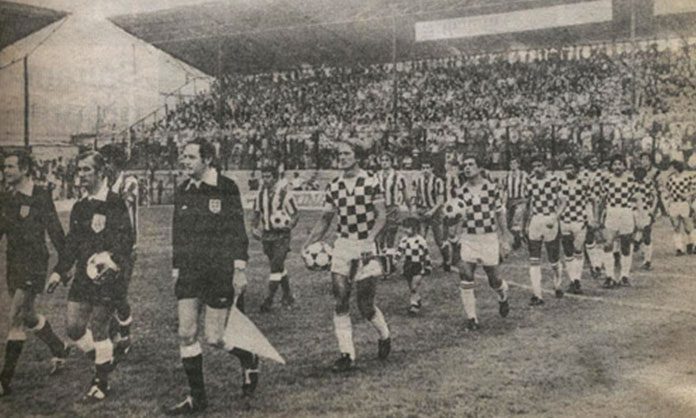
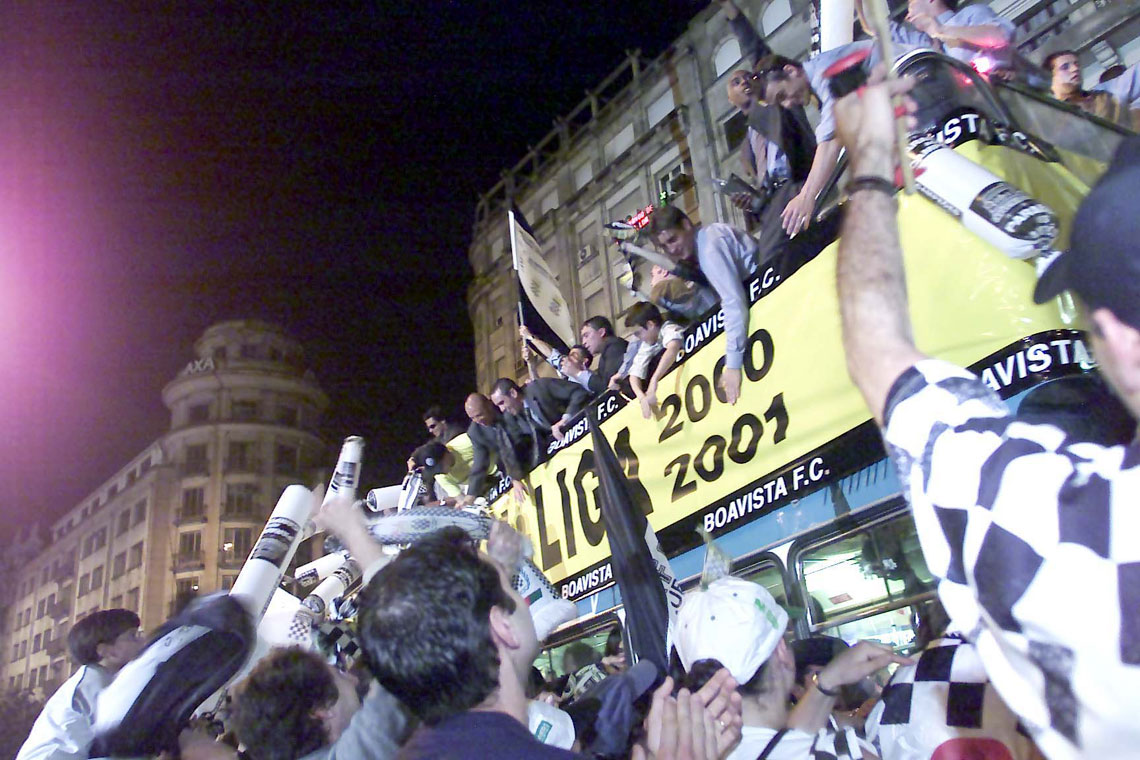
The 1980s and 1990s saw Boavista perform well in Europe, facing and sometimes even beating some of the best clubs in the world at the time. There was only one thing missing: the Portuguese title. Soon, that box would be checked as well. In the season 2000/01, three years after Valentim Loureiro left the presidency and passed the torch to his son, João Loureiro, Boavista won the Portuguese First League for the first, and only time so far. This was only the second time a club that was not Porto, Benfica, or Sporting had won the league. Boavista continued to perform well in Europe, both in the Champions League and UEFA Cup, where they managed to reach the semi final, losing to a strong Celtic side led by Henrik Larson. The good times, however, would not last for much longer.
This period of success came to a halt with the “Apito Dourado” scandal and the club’s subsequent administrative relegation. After several seasons, another relegation – from the second to the third tier – occurred, this time “earned” on the pitch (a 1-4 defeat at the hands of Sporting da Covilhã, which, coincidentally, was the only Boavista game I saw live in the stadium… sorry about that, lads! 😦 ) and a lengthy legal battle that lasted for several years, the club’s administrative relegation was overturned, and they eventually were returned to the top tier.
From then on, Boavista remained a mid/bottom table team up until the end of the last season. During this time Boavista was a somewhat competitive team on the field, but they were facing very serious financial issues behind the scenes.
The Final Whistle?
In October 2020, Boavista’s shareholders approved the sale of slightly over 50% of the SAD’s shares to the investor Gérard Lopez. During Lopez’s tenure as majority shareholder, the club struggled financially even more than they had up to this point, even missing payments to their staff and players several times and being barred by FIFA from signing players due to unpaid fees in 2023.
The most recent crisis began to unfold after the latest relegation was confirmed back in May 2025. As explained at the beginning of this post, the club’s financial troubles prevented them from securing a license for the second, third, or fourth divisions, leading to a demotion to the regional amateur leagues and the club’s SAD recently initiated insolvency proceedings aimed at financial recovery.
In response to the crisis, the club’s president, Rui Garrido Pereira published an open letter to members and fans where he acknowledged the failure of the professional football project and stated that the club’s board is committed to follow a new direction, separated from the SAD. He emphasized that the club’s board was not to blame, as they had been marginalized in many decisions by the SAD. The club’s goal is now to ensure the senior football team continues to exist and is registered in a division that is compatible with its current reality. Garrido Pereira also stated that the club’s identity is not for sale, and he sees this as a historic opportunity for the club to make a reset with dignity.
At this point, the club’s fans are divided. Some of the members of the Boavista ultras “Panteras Negras” have split from the club and started a new team called Panteras Negras Footballers Club (in an homage to the club’s English-influenced origins), even though many fans of the club that are not part of that ultras group do not approve of that move.
There is a real possibility that the club and the SAD might break in the very near future, leading to the possibility of Boavista’s SAD team being registered in the first tier of the regional Porto leagues and Boavista FC being registered in a lower tier of the Porto leagues (ironically, with the possibility of facing Panteras Negras Footballers). The worse possibility of all is that Boavista might actually fold as a club. Both the club and the SAD are millions of Euros in debt and, like many other historical Portuguese clubs, might just cease to exist.
On a personal level, even though I am not a Boavista supporter, I do care for the club and I hope that they divorce from the SAD, that they manage to register a team for the next season, and that they rebuild Boavista, bit by bit, and in a not too distant future we can see the club being successful again.
Happy birthday Boavista. And good luck. I’m rooting for you.
Historical archives
Boavista FC: history and documentaries
Sources:
1. Zerozero.pt. Boavista. URL.
2. Pereira, Ricardo. O Futebol Portuense Durante a Primeira Guerra Mundial. URL.
3. Boavistafc.pt. História Boavista FC. URL.
4. Observador.pt. Acionista Gérard Lopez oficializa compra da maioria do capital da Boavista SAD. URL.
5. Record.pt. Panteras Negras FC: Grupo de adeptos do Boavista cria novo clube como alternativa ao projeto da direção. URL.



Leave a comment